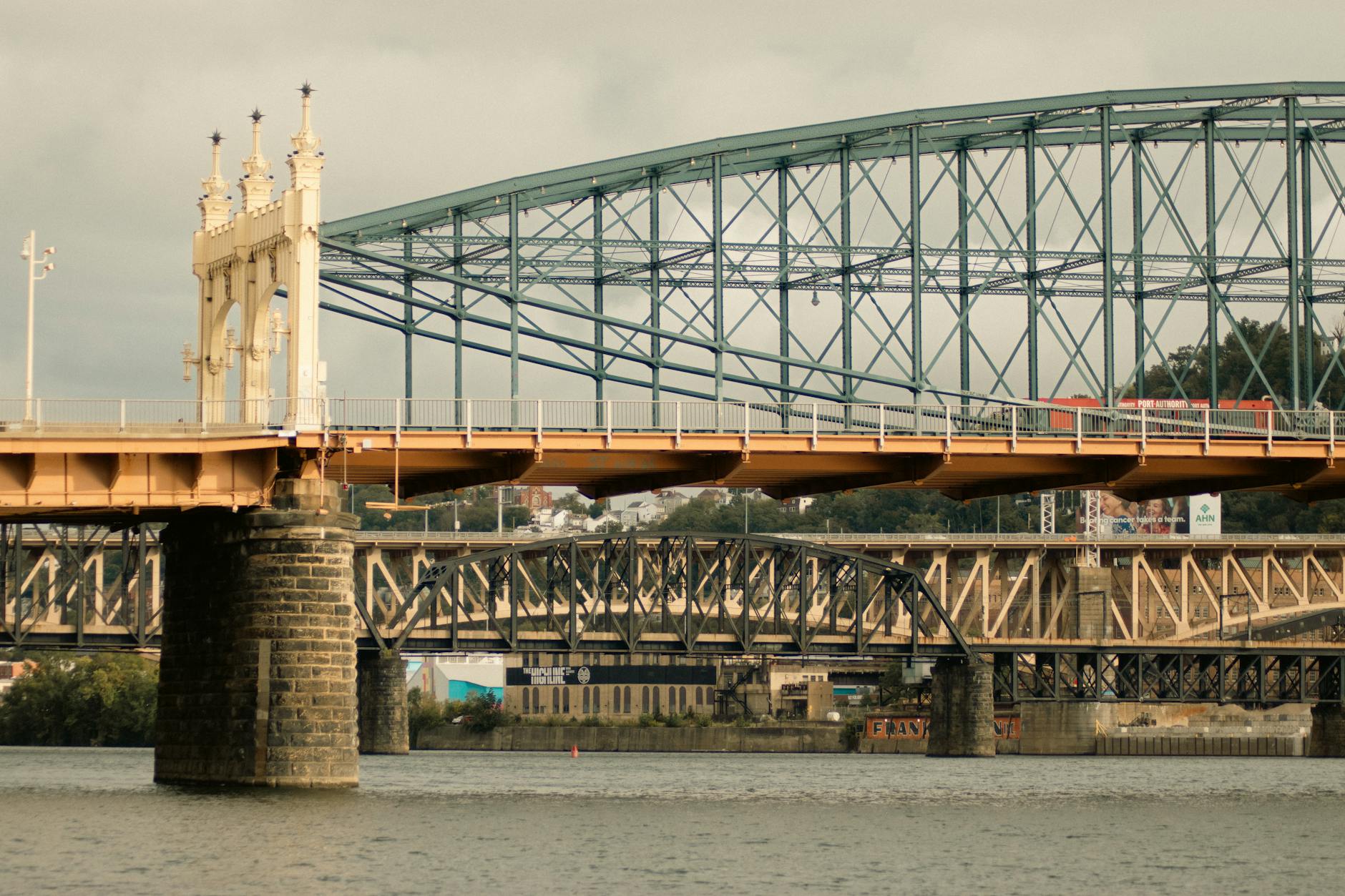
In the midst of Pittsburgh's bustling streets and intricate network of bridges, the ensuing fallout from the Fern Hollow Bridge collapse has thrown a spotlight on the city's aging infrastructure and the need for urgent investment. Just 25 days after he took office in January 2022, Mayor Ed Gainey was confronted with one of the most significant challenges of his tenure—addressing the city’s deteriorating bridges. Fortunately, the collapse, which occurred early in the morning and thankfully resulted in no fatalities, served as a wake-up call revealing years of disregard for the city's 146 bridges.
The Aftermath of the Collapse
The Fern Hollow Bridge collapse on January 28, 2022, not only highlighted the precarious state of Pittsburgh's infrastructure but also ignited a series of swift administrative actions to reassess and restore these critical structures. Less than a year later, in December 2022, the bridge was reopened to the public, but doubts over the safety of other bridges lingered as 33 additional bridges were already listed in poor condition, many for over a decade.
Consultant Analysis and Funding Insights
Recognizing that decades of neglect could no longer be ignored, the Gainey administration sought the expertise of WSP Inc., a consulting firm tasked with evaluating the city’s infrastructure needs. The resulting comprehensive report released in February 2024 detailed a staggering estimated cost of $471.6 million to address various vulnerabilities in and around the city’s bridges. Of this amount, $135.4 million was identified as necessary for nine bridges requiring immediate repairs, while an additional $276.3 million is earmarked for extensive work on 98 bridges by 2039. Moreover, $59.4 million will be allocated for long-range projects to be completed by 2056.
These figures reveal a stark reality: The city must spend at least $9.65 million every year on routine maintenance to prevent further deterioration of its bridges. Unfortunately, the Gainey administration was only able to allocate $1.75 million in 2024 and $2.3 million in 2025, with an insufficient $2.7 million projected for 2026. Unsurprisingly, the number of bridges in poor condition grew to 38.
Immediate Actions and Future Plans
Under Gainey's leadership, the city acted decisively, closing several bridges for emergency inspections. Notably, the Charles Anderson Bridge underwent immediate rehabilitation, with efforts expediting its full upgrade instead of settling for temporary fixes. Meanwhile, the Panther Hollow Bridge, identified as requiring structural repair, remains closed while other assessments continue.
As Gainey reflects on his four-year term, incoming Mayor Corey O’Connor inherits a bridge system still grappling with significant issues. In his discourse, O’Connor stressed that addressing these ongoing challenges will be a top priority. “I have spent the past several months meeting with stakeholders to investigate new approaches to our bridge maintenance and replacement,” he indicated.
A Collective Responsibility
The residents of Pittsburgh must grapple not only with the physical implications of failing infrastructure but also with the financial burdens tied to long-term renovations. The city’s commitment to enhance the safety and reliability of its bridges will require robust funding from federal agencies, state collaborations, and adaptive local strategies.
Although the collapse of the Fern Hollow Bridge stirred immediate action, it also begs the enduring question: Will the city maintain its focus on fortifying its bridges, or will this be yet another opportunity that slips through the city’s grasp?
As Pittsburgh continues forward, one thing remains clear: a robust, well-funded infrastructure plan is crucial to ensuring the safety and wellbeing of its citizens and maintaining the city's reputation as a vibrant, thriving urban environment.
For more updates on Pittsburgh's infrastructure and ongoing construction projects, stay connected with us at the Pittsburgh Post-Gazette.
First Published: January 2, 2026
Updated: January 3, 2026
Author: Ed Blazina, Pittsburgh Post-Gazette

